Hastelloy Etchants
Guide to etching Hastelloy and nickel-based superalloys. Covers Adler’s etchant and Weck’s reagent for revealing grain boundaries and microstructural features in these highly corrosion-resistant alloys.
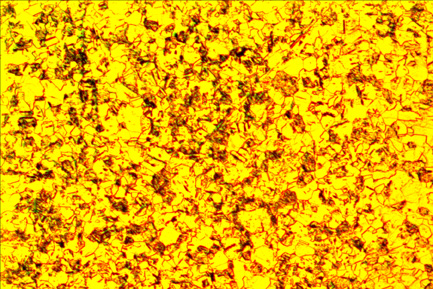
Alloy Classification & Preparation
Hastelloys are nickel-based superalloys with exceptional corrosion resistance, making them challenging to etch.
Common Designations
Hastelloy alloys classified by primary alloying elements and corrosion resistance.
View alloy series
- B series: Ni-Mo alloys – HCl and reducing environment resistance
- C series: Ni-Cr-Mo (C-4, C-22, C-276, C-2000) – Wide chemical resistance
- G series: Ni-Cr-Fe – Phosphoric/sulfuric acid environments
- Hastelloy N: Ni-Mo-Cr – Molten fluoride salt resistance
- Hastelloy S: Ni-Cr-Mo – High-temperature oxidation resistance
- Hastelloy X: Ni-Cr-Fe-Mo – Exceptional high-temperature strength
Typical Composition (Hastelloy X)
Major alloying elements and their roles in the microstructure.
View composition
- Nickel: Remainder – FCC matrix structure
- Chromium: 20.5–23% – Oxidation and corrosion resistance
- Iron: 17–20% – Solid-solution strengthening
- Molybdenum: 8–10% – Strengthening and corrosion resistance
- Cobalt: 0.5–2.5% – High-temperature properties
- Carbon: 0.05–0.15% – Grain boundary carbides
Preparation Tips
Hastelloy alloys are tough and work-harden readily during preparation.
View key considerations
- Use low-speed precision cutting with adequate coolant
- Use fresh abrasives to prevent smearing of the ductile matrix
- Diamond polishing recommended for scratch-free surfaces
- Final polishing with colloidal silica removes residual deformation
- Electrolytic etching may be needed for highly resistant grades
Recommended Etchants
Due to high corrosion resistance, aggressive etchants or extended times may be required. For more guidance and the Materials Prep ELN etchant catalog, see Etchant Resources.
| Etchant | Composition | Conditions | Applications |
|---|---|---|---|
| Adler’s Etchant |
|
|
|
| Weck’s Nickel Reagent |
|
|
|
| Glyceregia |
|
|
|
| Kalling’s No. 2 (Waterless) |
|
|
|
| Marble’s Reagent |
|
|
|
| 10% Oxalic Acid (electrolytic) |
|
|
|
Troubleshooting
Common etching issues and how to resolve them.
No Visible Etching
Hastelloy’s corrosion resistance makes etching difficult. Try increasing immersion time or use stronger Adler’s etchant.
Over-etching
Surface appears too dark or pitted. Reduce etching time and monitor progress between short immersions.
Uneven Etching
Ensure sample surface is dry and free of polishing compounds. Use consistent swabbing motion.
Staining
Rinse immediately with water and dry with compressed air or alcohol to prevent oxide formation.
Poor Grain Boundary Contrast
Try Weck’s Nickel Reagent for improved grain structure, or consider electrolytic etching for resistant grades.
Etchant Shelf Life
Prepare fresh Adler’s etchant for each use. The ferric chloride solution degrades over time.
Related Resources
Hastelloy Prep Guide
Step-by-step preparation procedures for Hastelloy alloys.
View guideEtchant Catalog
Browse and filter the full PACE etchant catalog inside the Materials Prep ELN.
Open the catalogEtchant Resources
Material guides, technique reference, safety info, and the Materials Prep ELN catalog, all in one place.
Open the hubEtching Consumables
PACE's pre-mixed etchant catalog organized by material, with composition, conditions, and shop links.
Browse consumables